Aug 12, 2026
Analysis: Regulation of Mobile Phones in Schools in Europe
A clear analytical website dedicated to the issue of mobile phone regulation in Europe.
Read more →
Faculty of Education, Palacký University Olomouc
A clear analytical website dedicated to the issue of mobile phone regulation in Europe.
Read more →Expert opinion on the proposals for a blanket ban on social networks for children prepared by the MUNI and UPOL team.
Read more →We have completed an extensive CEDMO project focused on the issues of risks associated with AI and digital literacy.
Read more →A new four-year project strengthens the resilience of children aged 9–11 against digital risks.
Read more →
The Institute for Research and Education in Digital Technologies and Cybersecurity is a modern academic and research center focused on the study and development of solutions in the fields of online safety, media literacy, and the use of advanced technologies in education — including artificial intelligence.
Our work addresses major challenges of the digital environment, including cyberbullying, cyber grooming, sexting, disinformation, misinformation, and online fraud. A significant part of our research and educational efforts is dedicated to the risks associated with social media platforms, especially those affecting children, adolescents, and vulnerable users. We closely examine the psychological, social, and technological aspects of digital communication and harmful online behavior.
The Institute actively conducts scientific research, develops educational programs for schools and professionals, creates digital prevention and intervention tools, and contributes to national and international legislation. We also explore how digital technologies — including AI — can support safer, more effective learning environments.
The Institute builds on the expertise of the Centre for the Prevention of Risky Virtual Communication, which laid the foundation for many of our current projects and long-term strategies. Over the years, the Institute/Centre has received numerous national and international awards for its contribution to digital education and online safety.
Our awards: Bronze Medal of the Deputy President of the Police 2023, Cyberprize Best Project 2023 (1st place), Best Project of Crime Prevention 2023 (1st place), European Crime Prevention Award 2015 (1st place, national round), European Crime Prevention Award 2015 (4th place, European round), European Crime Prevention Award 2009 (3rd place, national round), Important project of Olomouc Region 2015, Honorable Recognition of Rector of Palacký University (5x), Lemur 2020 (best campaign).
We collaborate with a wide range of partners, including the Ministry of Education, Youth and Sports, the Ministry of the Interior, the Police of the Czech Republic, and numerous private sector companies. These partnerships allow us to connect academic expertise with real-world practice and support innovation in the field of digital risk prevention and education.

The Institute conducts applied and contract-based research focused on the safety of children, adolescents, and adults in the digital environment. We study risk phenomena associated with modern technologies and digital communication, including cyberbullying, cyber grooming, sexting, harmful content, sharenting, deep nudes, online manipulation, disinformation, and online fraud.
Our research team explores both psychological and behavioral aspects of digital risks, as well as the legal, technical, and educational contexts. We analyze the impact of online threats on various population groups, identify emerging risk behaviors, and develop evidence-based tools and interventions for prevention and support.
An important part of our research is dedicated to the use and potential misuse of artificial intelligence in education. We investigate how AI tools affect the learning process, student behavior, and the overall digital culture in schools, while also identifying ethical and safety concerns related to their implementation.
In addition to grant-funded academic research, the Institute also carries out contract research and expert analyses for schools, government institutions, and private sector partners. We regularly publish the results of our research in prestigious peer-reviewed journals indexed in international databases such as Web of Science and Scopus.
Our work contributes not only to the advancement of scientific knowledge in the field of online safety and digital risk prevention, but also to shaping public policy, educational strategies, and digital competence development at both national and international levels.
| Title of research | Year | Target group, sample | Reports |
|---|---|---|---|
| Czech students in online world | 2025 | students, n=50000+ | [odkaz] |
| Czech Students and Artificial Intelligence | 2024 | students, n=28058 | [cz] |
| Czech Schools and Artificial Intelligence | 2023 | teachers, n=2175 | [cz] |
| Sharenting with Czech parents | 2022 | parents, n=2481 | [cz] |
| Children and the cult of beauty in the online world | 2022 | children 10-17, n=9441 | [cz] [en] |
| Online world of children's homes | 2022 | child clients and workers, n=197 (clients), n=166 (workers) | [cz] [en] |
| Czech teachers in the world of media | 2021 | teachers, age 21-78, n=2155 | [cz] [en] |
| Risk phenomena in the online environment of children of the Czech-Polish borderland | 2020 | — | [cz] |
| Czech Children in cyberspace | 2019 | children, age 7-17, n=27177 | [cz] [en] |
| Parents and parenting in the digital era | 2018 | parents, n=1093 | [cz] |
| Elders on the internet | 2017 | adults 35+, n=1072 | [cz] |
| Sexting and Risky Acquaintances Made by Czech Children in Cyberspace | 2017 | children, age 7-17, n=4878 | [en] |
| Risky behavior of Minecraft players | 2016 | players of Minecraft (children, adults), n=2331 | [en] |
| Cyberbullying of teachers | 2016 | teachers of primary and secondary schools, n=5136 | [cz] |
| Czech Children and Facebook | 2015 | children, age 9-17, n=1248 | [cz] |
| Specifics of Children Communication and Online Aggressors within the Online Assaults on Children | 2015 | children x attackers, 267 records | — |
| Danger of internet communication 5 (Czech Children) | 2014 | children, age 11-17, n=28232 | — |
| Risky behaviour of Slovak children | 2014 | children, age 11-17, n=1488 | — |
| Danger of internet communication 4 (Czech Children) | 2013 | children, age 11-17, n=21372 | — |
| Risky Behaviour of Students of Faculty of Education of Palacký University Olomouc within the Internet Environment | 2013 | students, age 20-25, n=386 | — |
| Research of formal and semantic analysis of computer passwords of young users | 2013 | people, age 18-67, n=3743 | — |
| Danger of internet communication 3 (Czech Children) | 2012 | children, age 11-17, n=10830 | — |
| Danger of electronical communication 2 | 2011 | children, age 11-17, n=12533 | — |
| Danger of electronical communication 1 | 2010 | children, age 11-17, n=1925 | — |
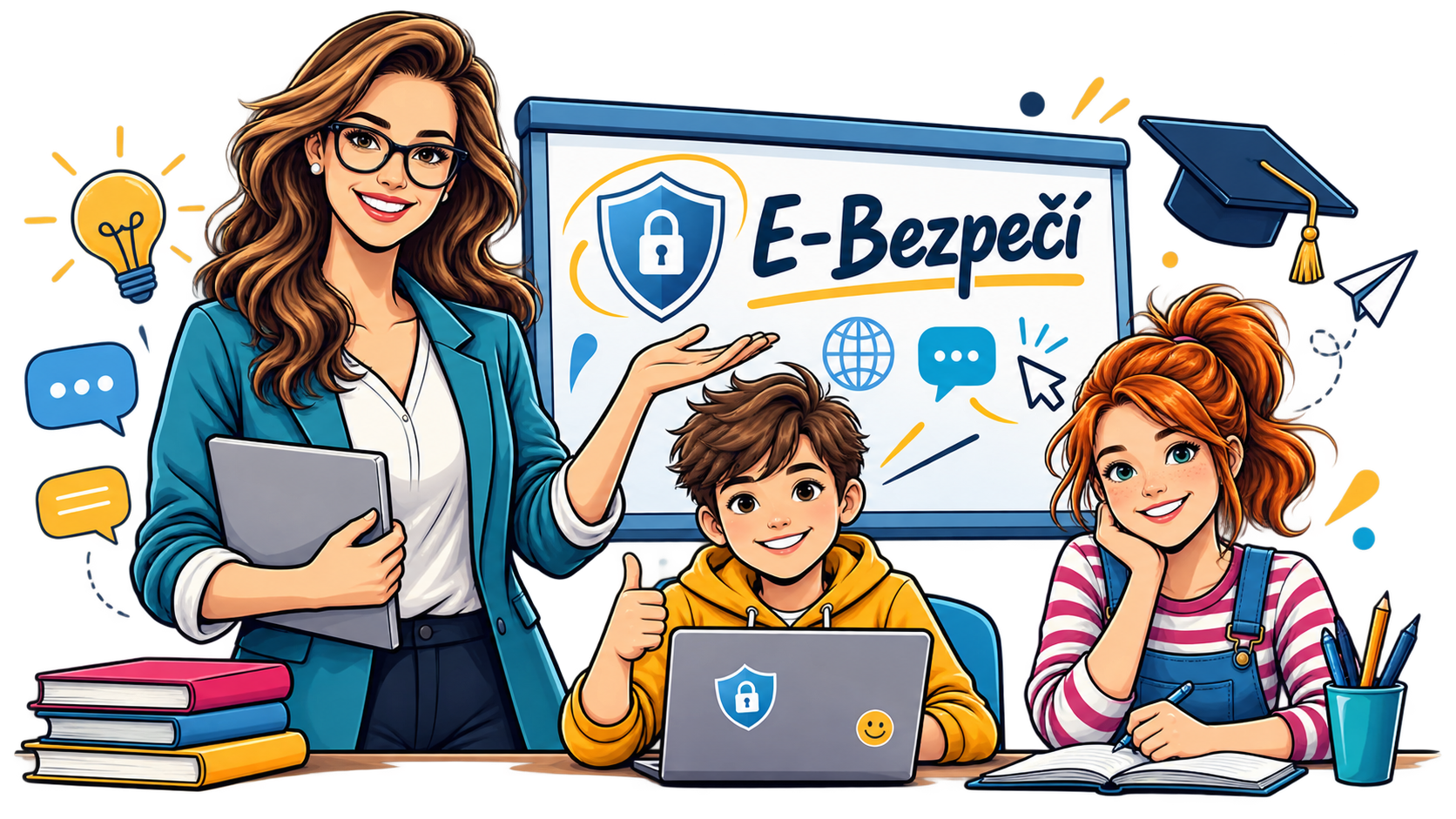
The Institute coordinates and implements the national E-Safety project, which focuses on educational programs and preventive activities in the areas of online safety, media literacy, artificial intelligence, and responsible use of modern technologies. The project targets a wide range of audiences – primary and secondary school students, teachers, parents, police officers, social workers, and seniors.
Educational activities take place throughout the Czech Republic. The Institute has its own team of professional lecturers who conduct approximately 400 educational events annually directly in schools, institutions, and community settings.
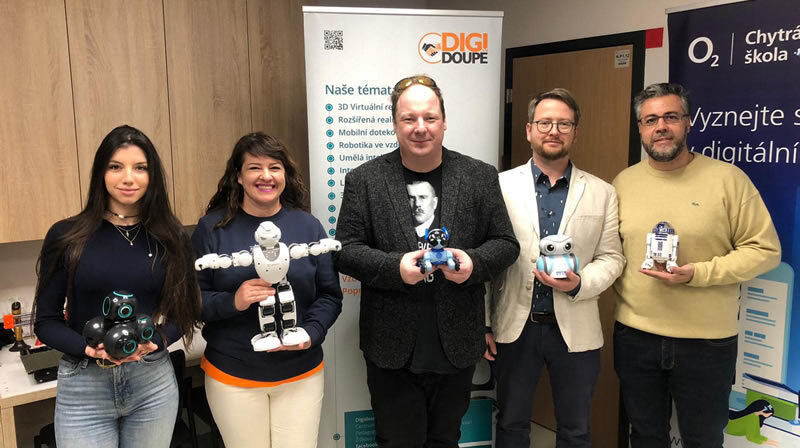
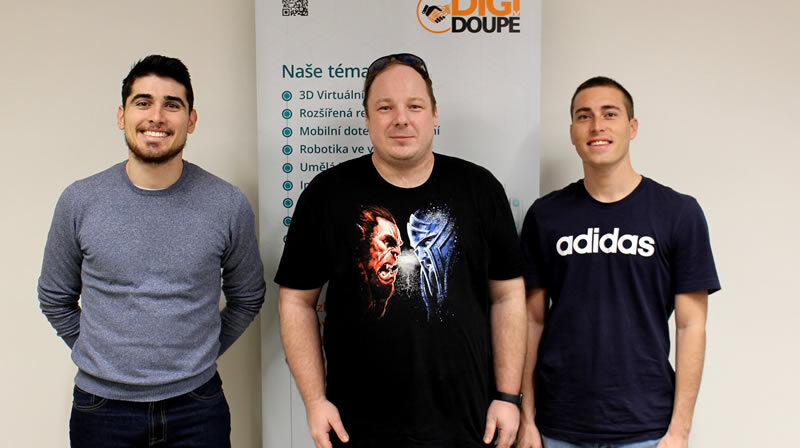
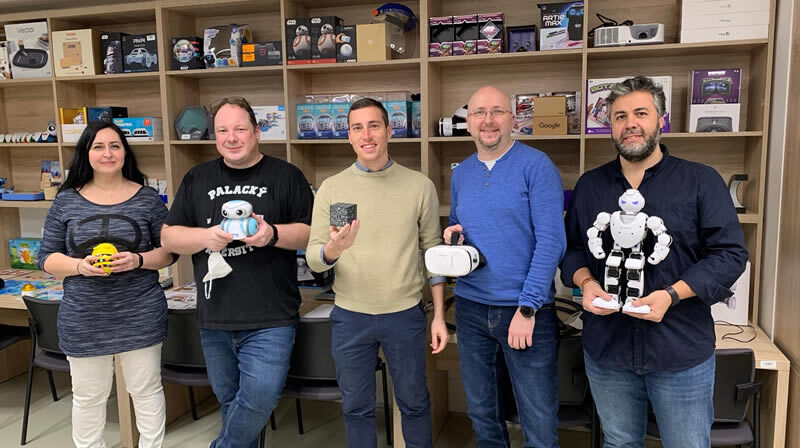
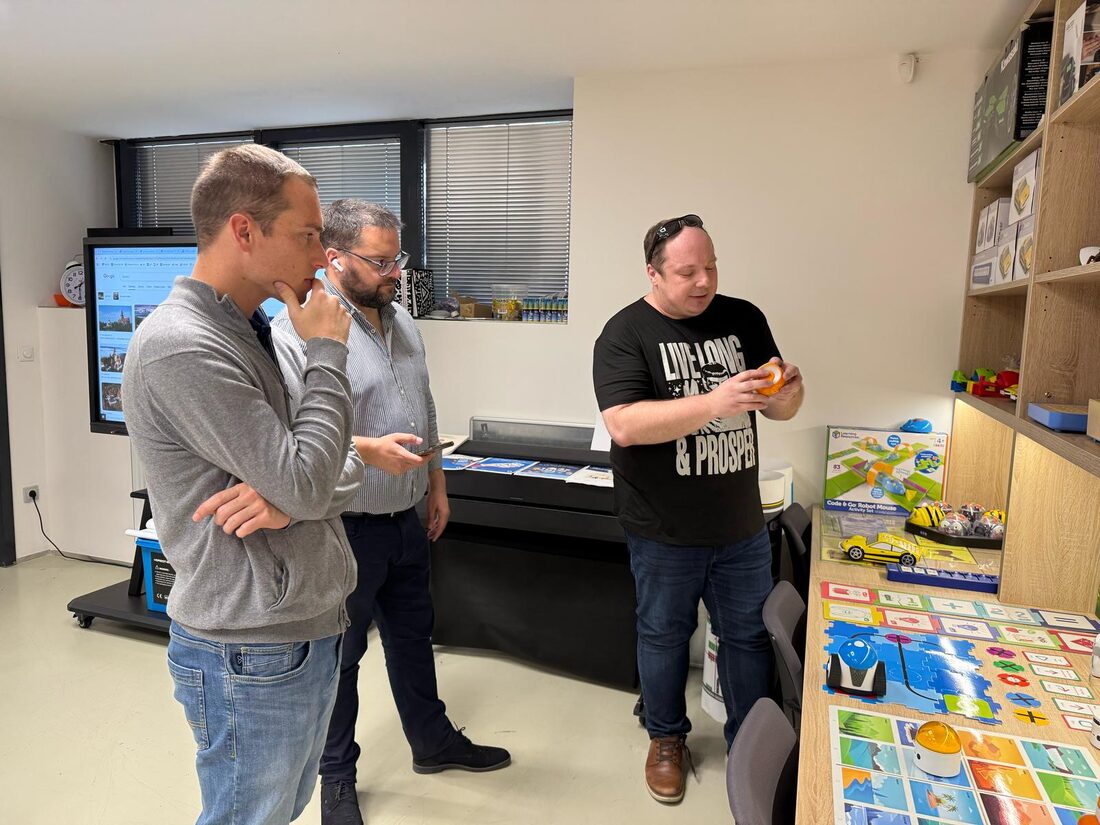
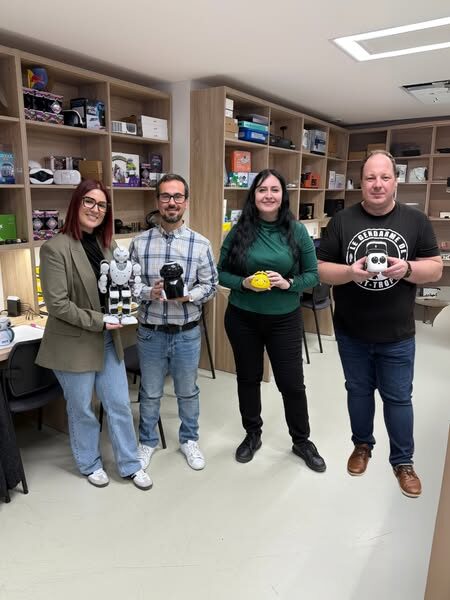
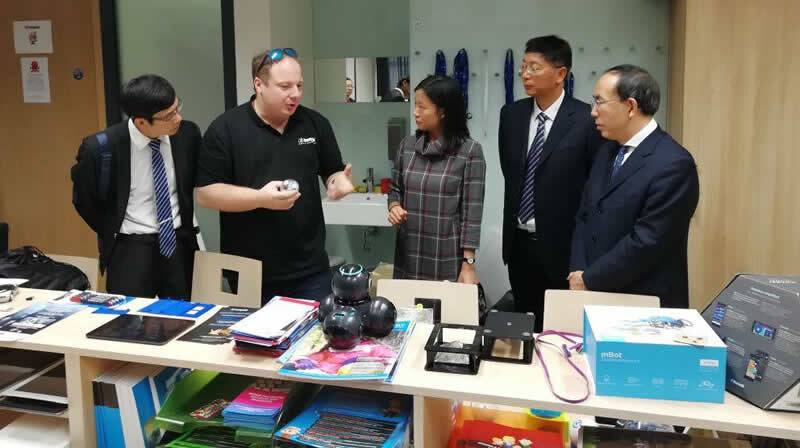
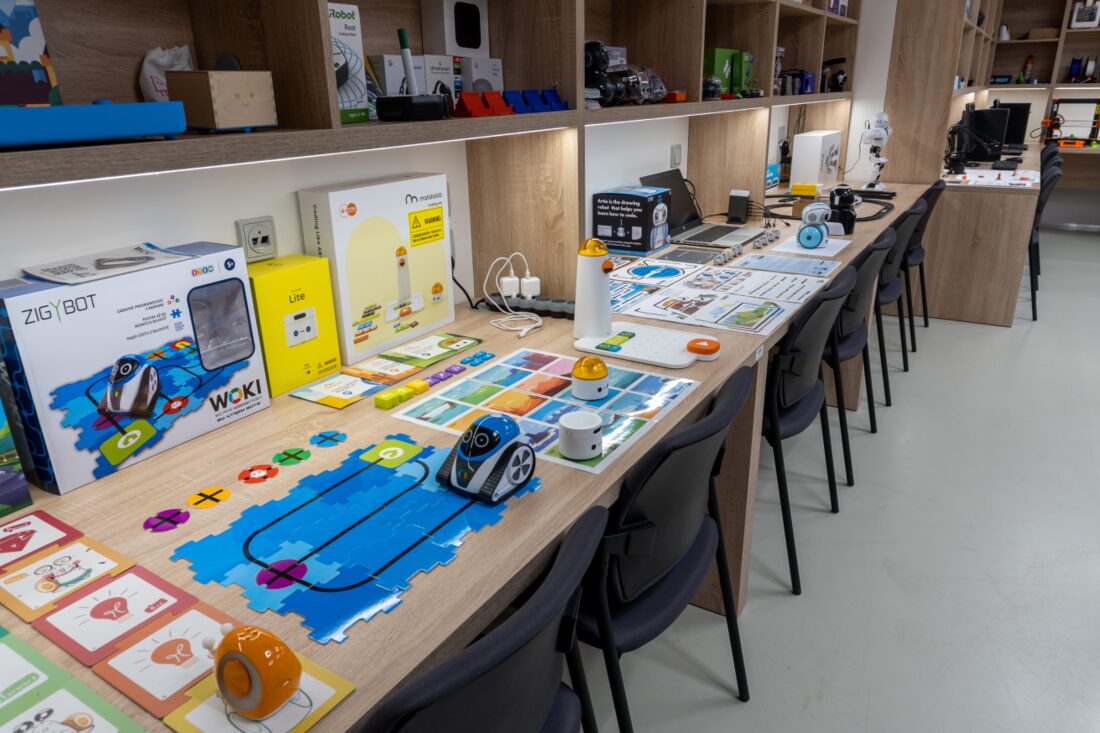
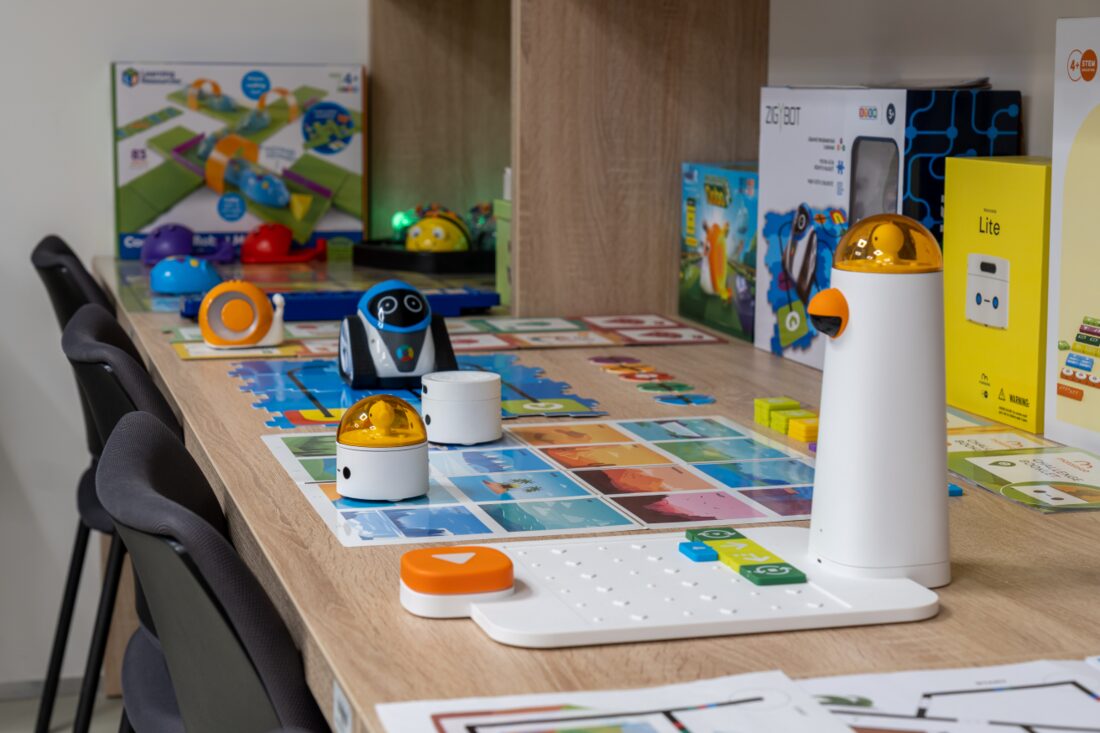
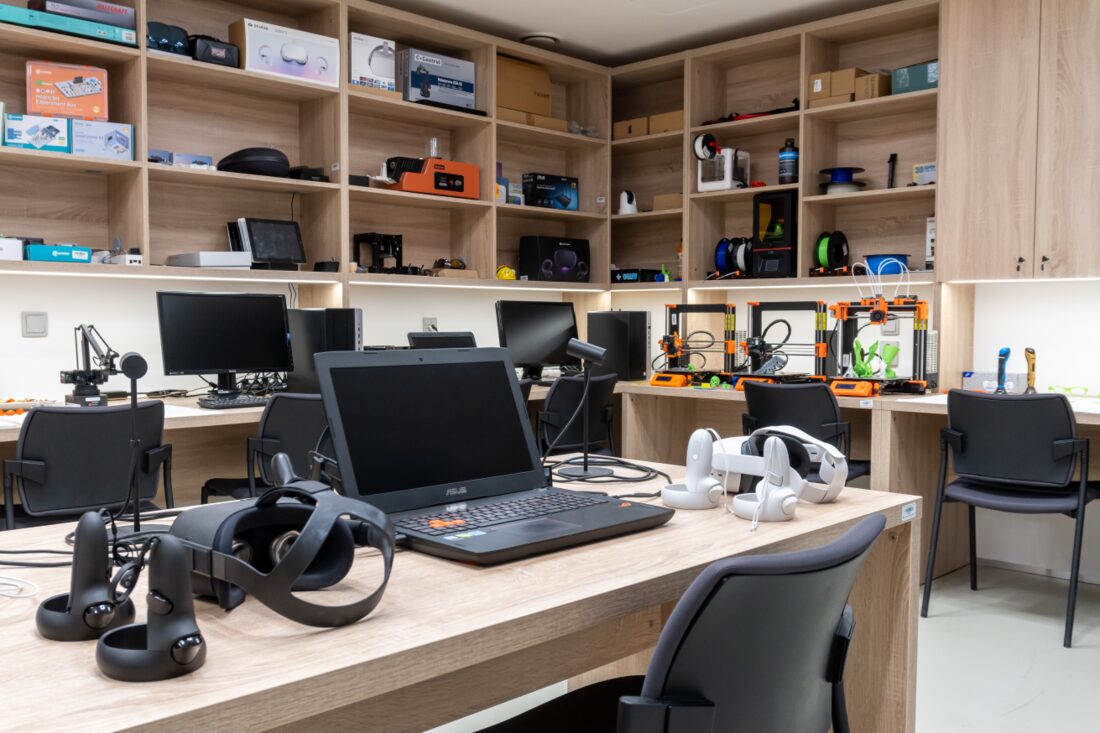
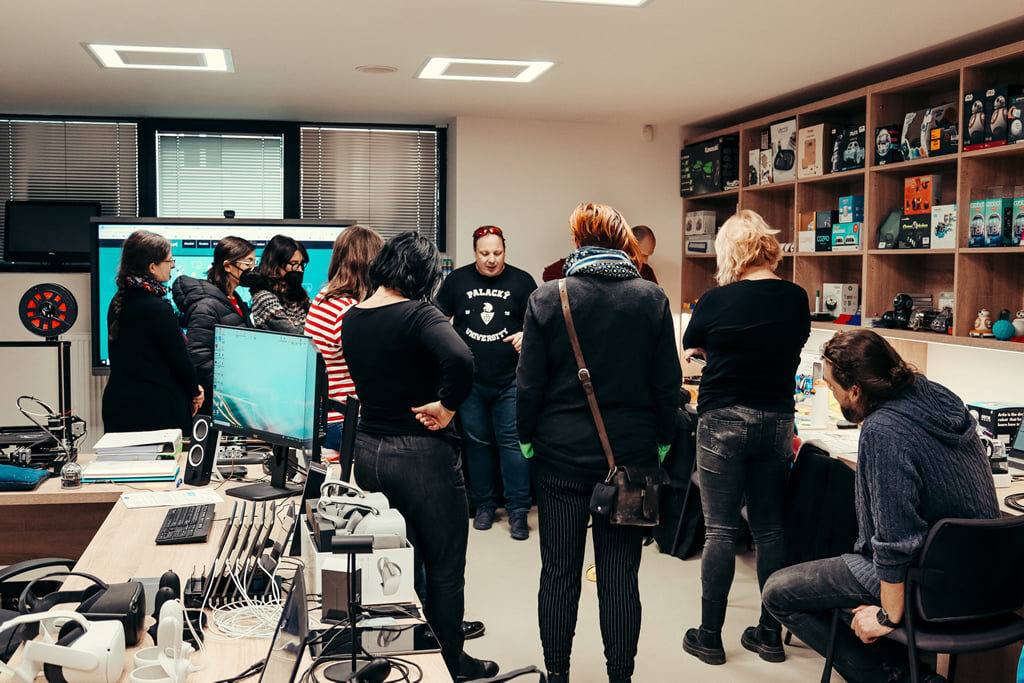
The Institute also operates a specialized educational laboratory Digidoupě, which provides practical training for teachers in the use of digital technologies in teaching.
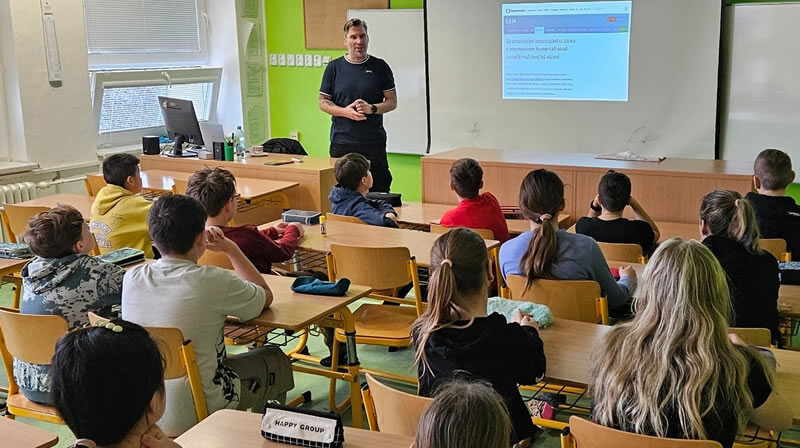
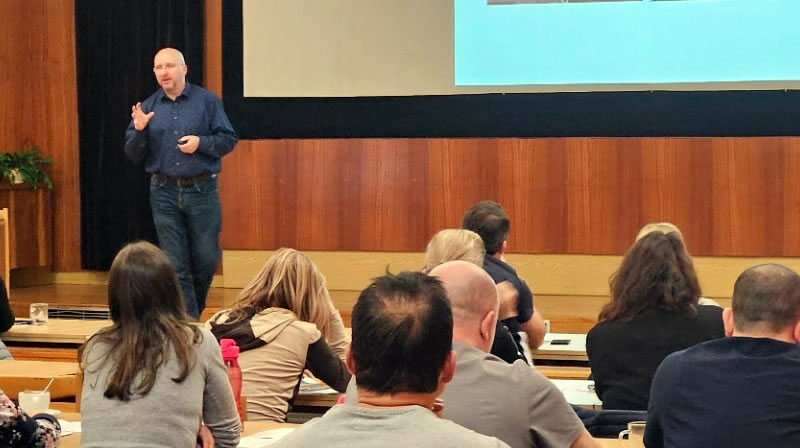
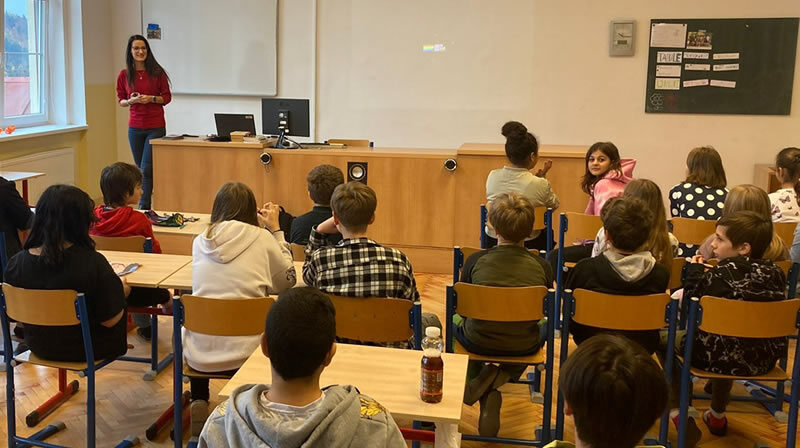
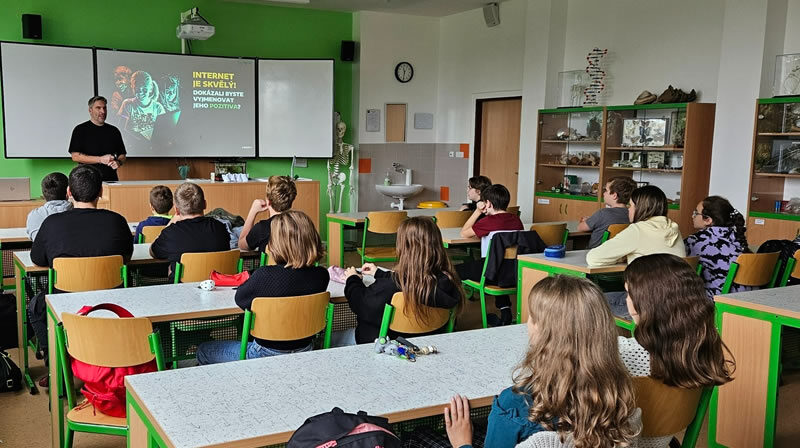
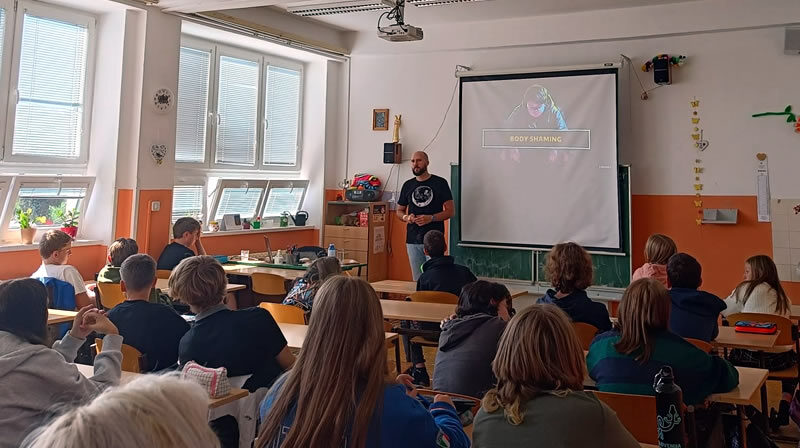
So far, the center has conducted educational events for more than 250,000 primary school students, over 5,000 police officers, more than 25,000 teacher training students, 20,000 primary and secondary school teachers, and over 7,000 university teachers. We have also trained thousands of parents, psychologists, crime prevention managers, and others.
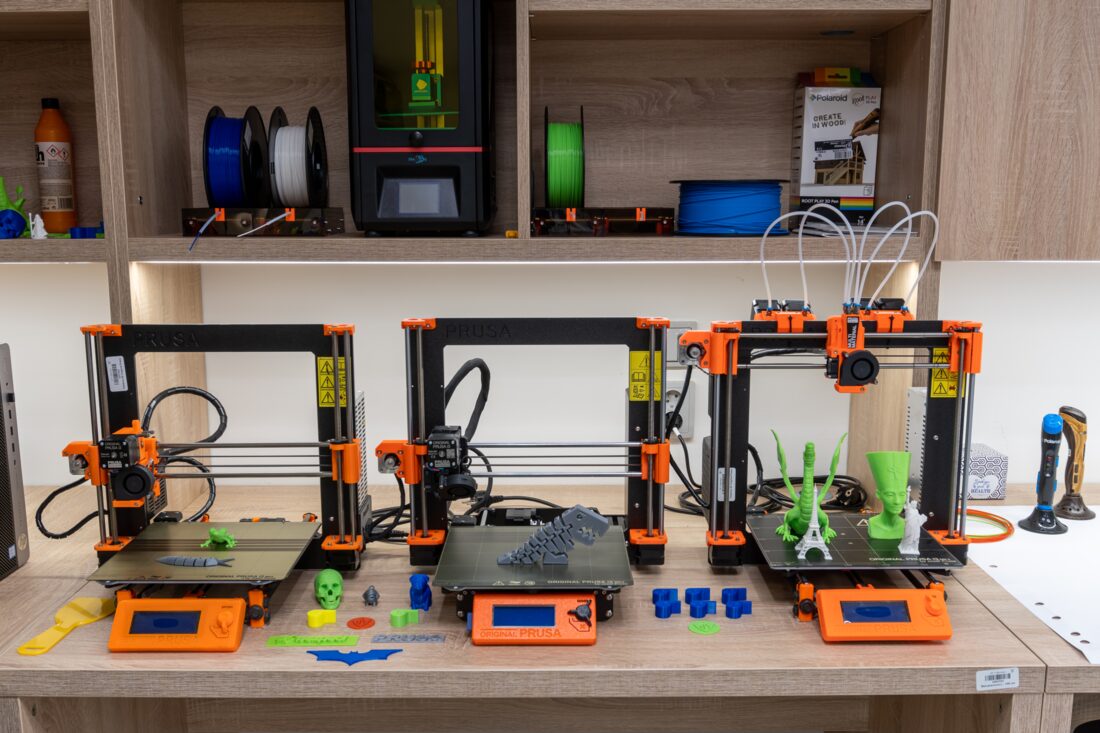
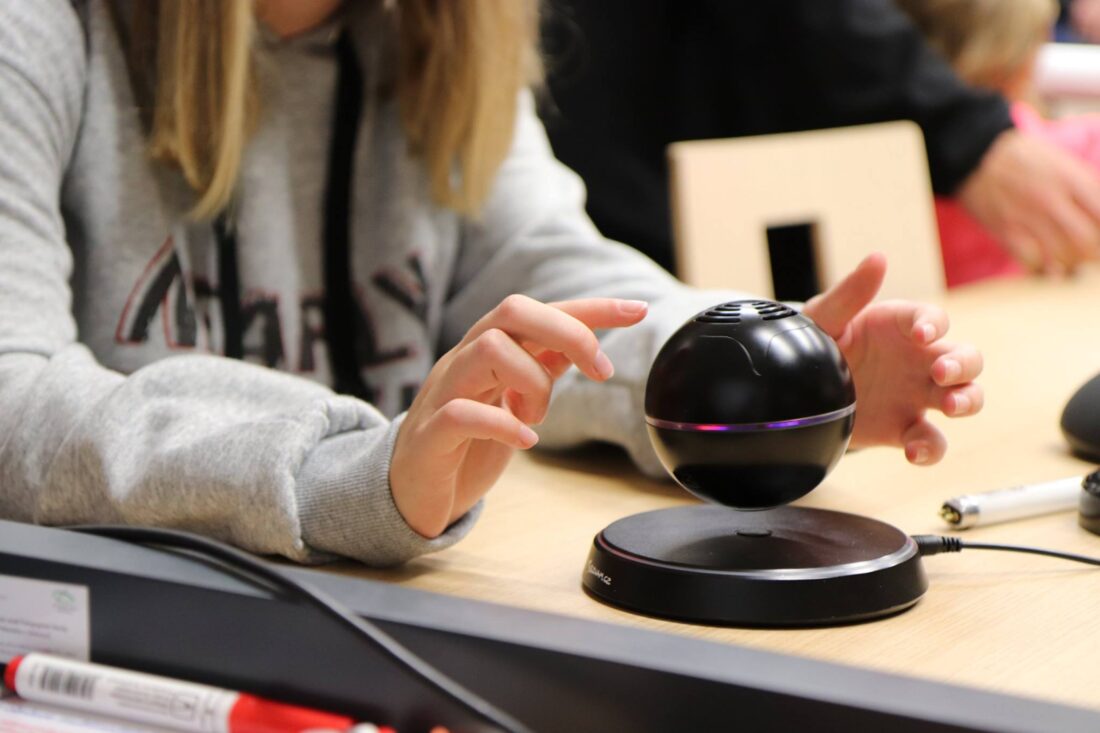
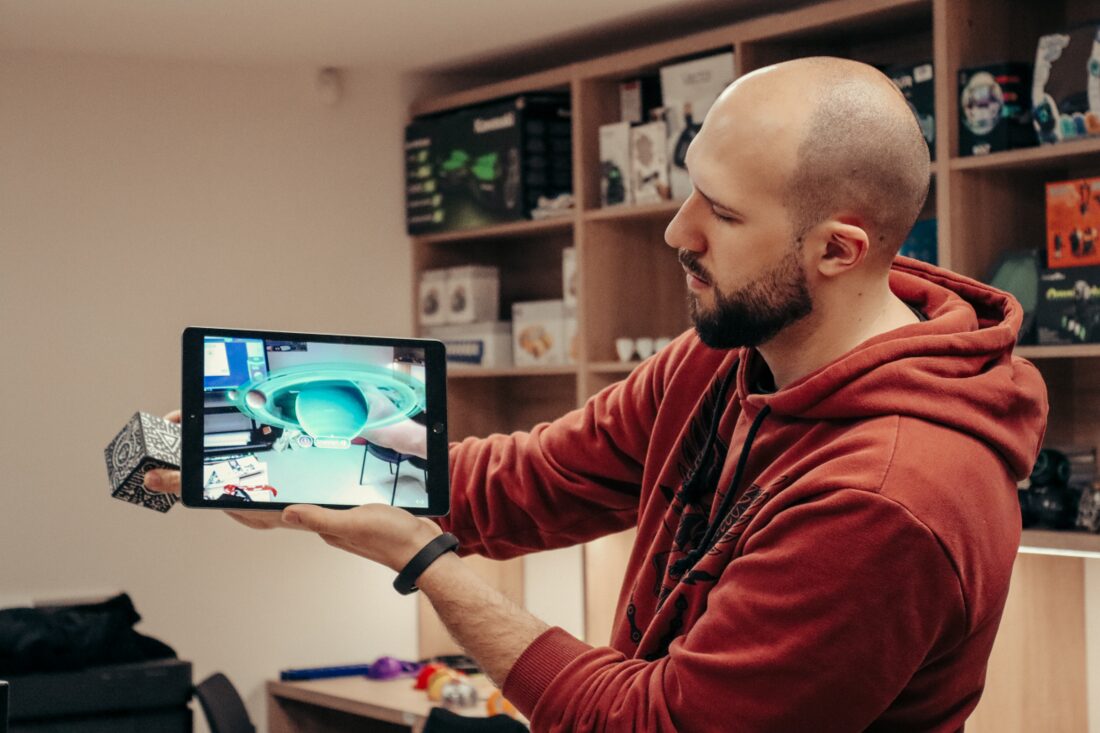
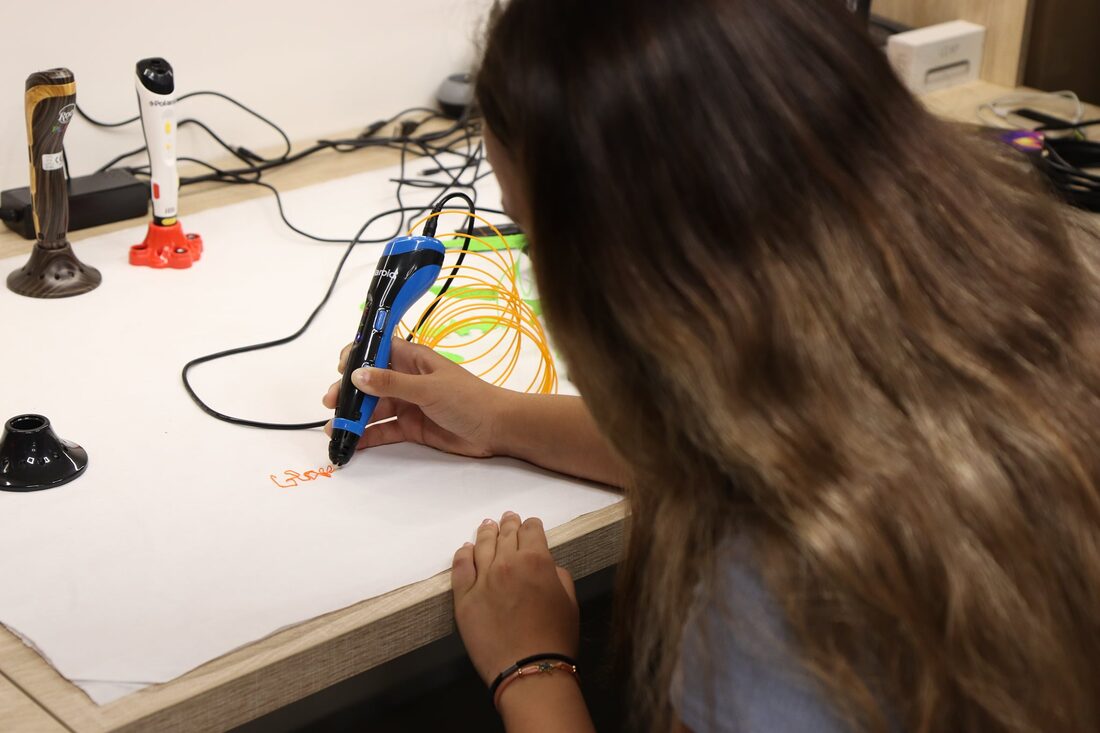
The Digidoupě laboratory, established at the Faculty of Education of Palacký University in Olomouc, serves as a center for the integration of modern information and communication technologies into the education of both children and adults. It focuses on the use of digital tools to increase motivation and interest in various scientific fields. The laboratory is accessible to students, educators, and other interested parties.
Digidoupě aims to increase the digital literacy of future teachers through teaching, projects, innovations, and research. It also supports existing educators and helps students who want to start technology-oriented businesses. It offers programs for children that promote meaningful use of technology.
Digidoupě Brochure
More information is available here: YouTube · Instagram




The Institute for Research and Education in Digital Technologies and Cybersecurity collaborates with the Ministry of Education, Youth and Sports on legislative documents focused on the general primary prevention of risky behavior. As part of this cooperation, the Institute has developed official materials for the Ministry addressing key topics such as cyberbullying and risky sexual behavior. These materials form the basis for national prevention strategies and are binding for all schools across the Czech Republic.
The updated documents are available on the official website of the Ministry of Education (in Czech only).

Since 2010, the Institute and its affiliated research teams have successfully implemented more than 100 grant-funded projects. These projects span a wide range of themes related to digital education, online safety, media literacy, technological innovation, and social responsibility.
We carry out both national and international projects. On the national level, we cooperate with ministries, state institutions, grant agencies, regional governments, municipalities, and private companies. At the international level, we participate in projects funded by the European Union and collaborate with numerous foreign academic and research institutions across Europe and beyond.
Our projects are aimed not only at producing academic knowledge, but also at creating practical outcomes with real social impact. Whether it's the development of educational tools, the implementation of large-scale prevention programs, or the creation of policy recommendations, we strive to address urgent issues affecting schools, families, and society as a whole.
Many of our project outcomes are actively used by public institutions, schools, NGOs, and policymakers. Some results have also contributed to shaping and updating national legislation in areas such as digital safety, education, and the protection of vulnerable groups in online environments.
We are proud to be supported by a wide range of partners from both the public and private sectors. Our corporate supporters include Microsoft, O2 Czech Republic, Google, ESET and ČSOB, while public institutional support comes from entities such as the Olomouc Region, the Statutory City of Olomouc, and the Statutory City of Ostrava.
The Institute is also a member of the international network CEDMO – Central Europe Digital Media Observatory, which brings together experts in media literacy, disinformation, and digital policy.
A four-year interdisciplinary project aiming to enhance the physical, psychological and social resilience of children aged 9 to 11 against the risks associated with digital technology use (cyberbullying, inappropriate content, social isolation). It involves national and international institutions, including Yale University and Victoria University. Funded by the Jan Amos Komenský Operational Programme.
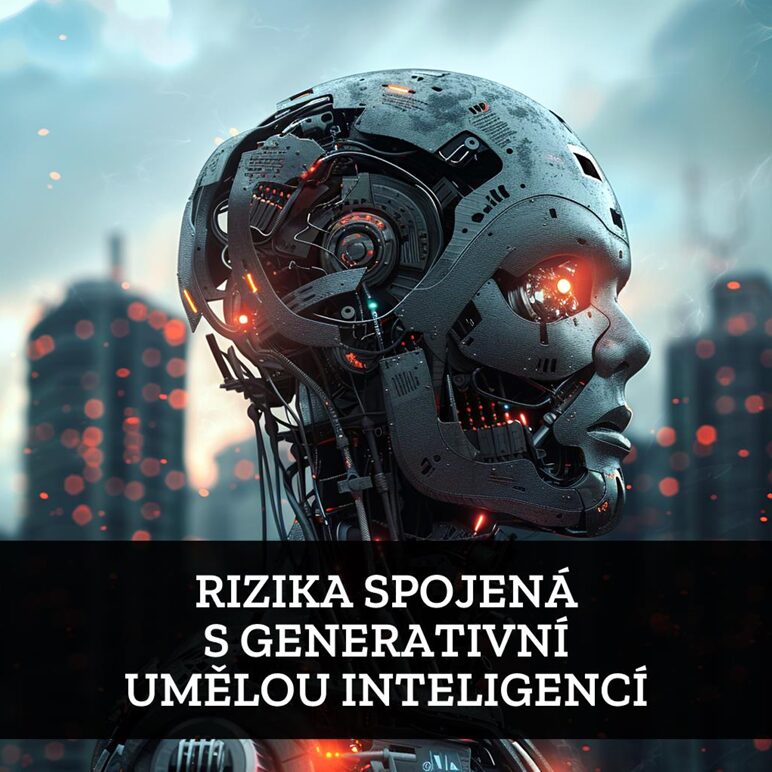
Led by the Faculty of Arts at Charles University, the project explores the integration of artificial intelligence — particularly large language models — into key societal domains such as democracy, education and interpersonal communication. Funded by the Jan Amos Komenský Operational Programme.
The project develops effective, evidence-based tools and policies to protect democratic societies from technologically driven manipulation in the digital media ecosystem. The consortium includes Charles University, Palacký University, the Czech Technical University, ČTK and Demagog.cz.
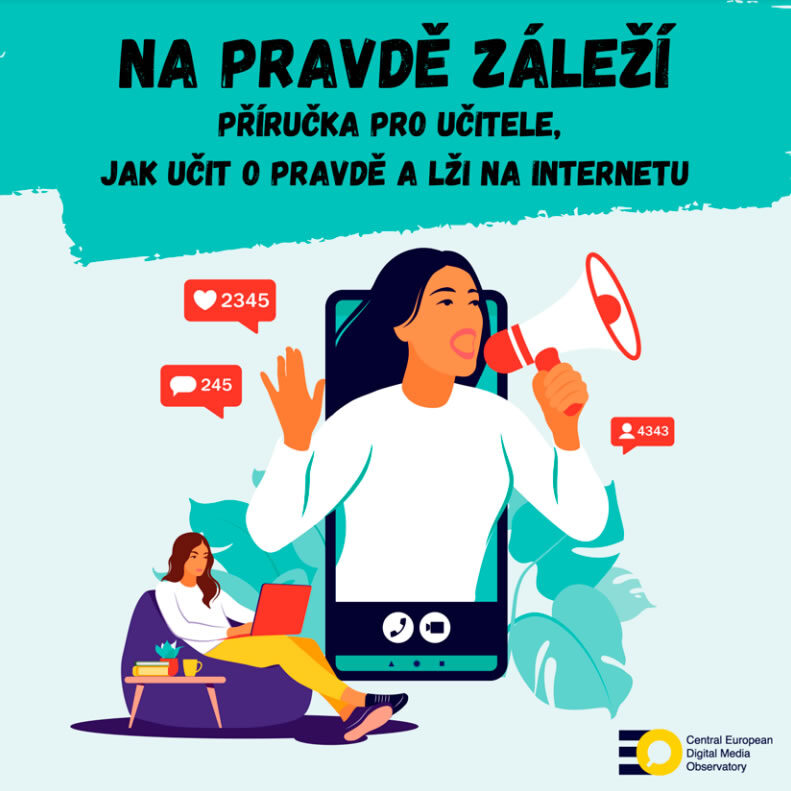
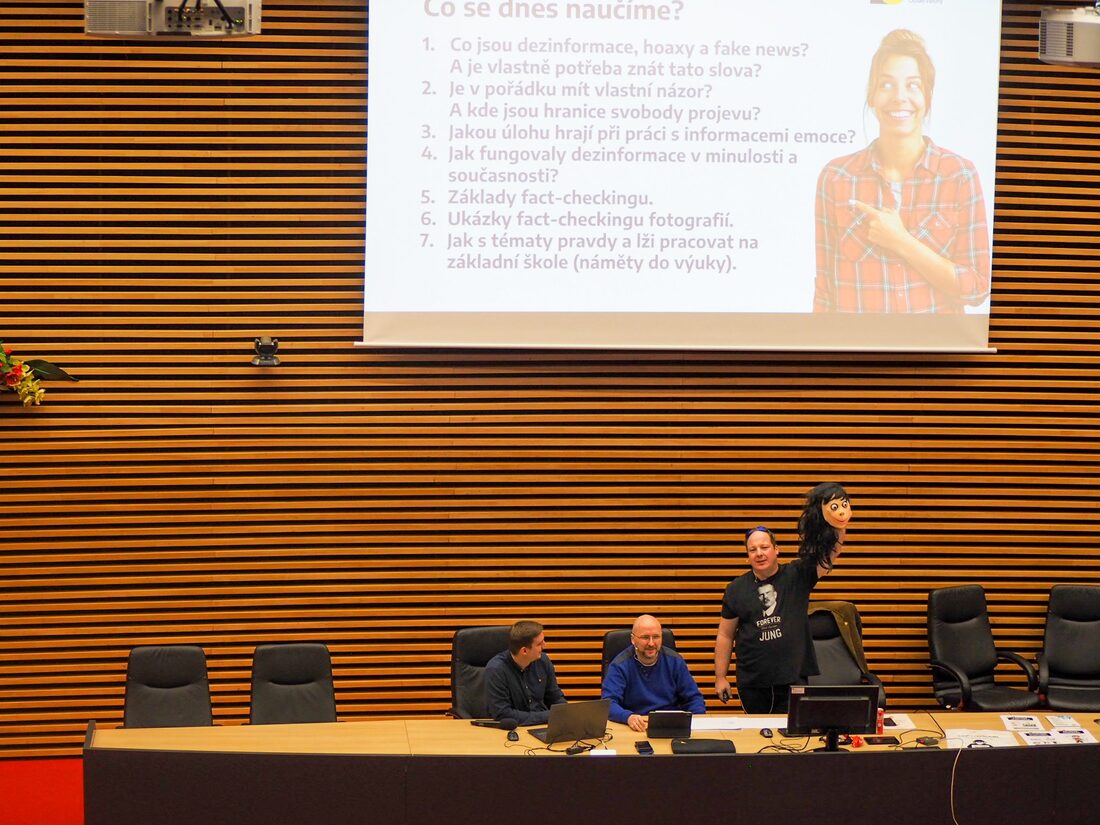
An independent non-partisan multidisciplinary hub aiming to identify, research and prioritise the most critical sources and causes of information disorders in Central Europe (mainly the Czech Republic, Slovakia and Poland). As part of the project, we organized a series of thematic lectures for teachers from all over the Czech Republic, with journalists and the general public also participating.
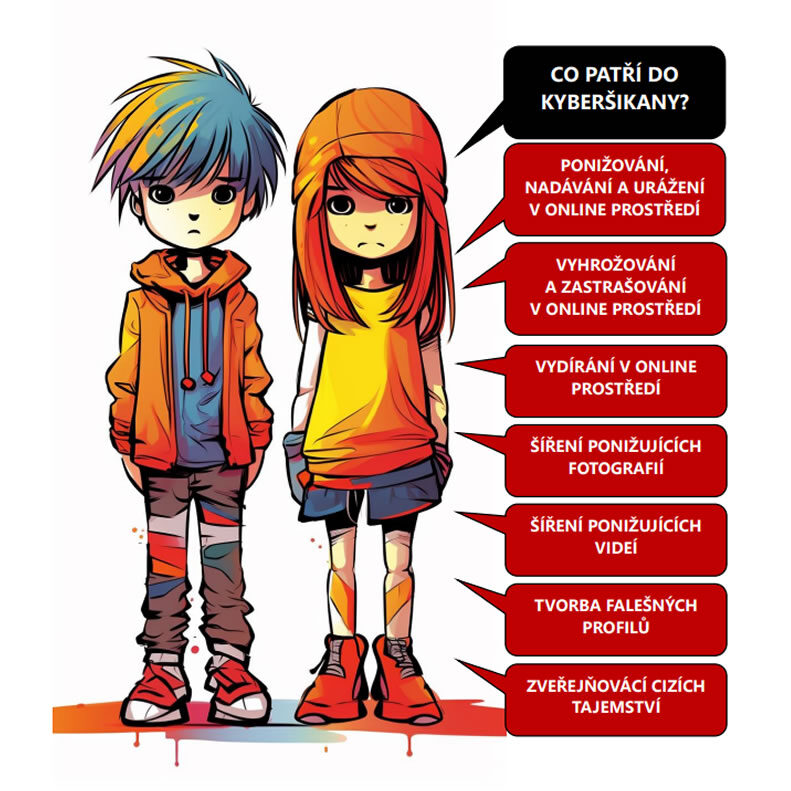
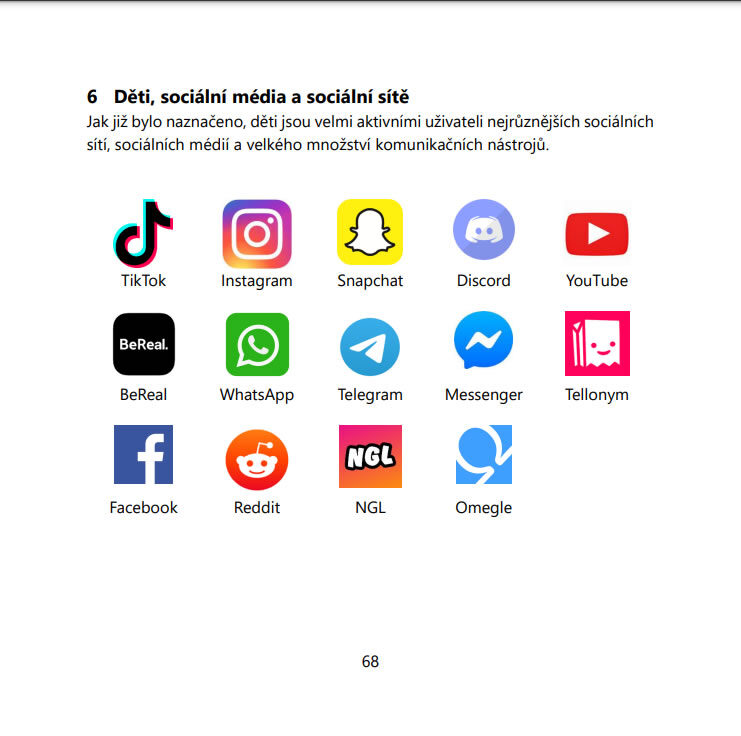
The project focuses on the prevention of risky behaviour on the internet, targeting both pupils and teachers. It addresses cyberbullying, cyber grooming, sexting and the dangers of social media. Activities are delivered directly in schools across the Czech Republic. It has run continuously since 2010 and is supported by the Ministry of Education.
Two educational initiatives developed with the Ministry of the Interior of the Czech Republic and the E-Bezpečí team. The CyberAcademy equips participants with knowledge and tools to combat online risks (cyberbullying, cyber grooming, sexting, online extortion and fraud). The Artificial Intelligence project addresses the challenges posed by the misuse of AI — deepfakes, deep nudes and AI-generated scams — and offers a guide to the ethical and legal aspects. We have also created materials for teachers and other groups (e.g. seniors) focused on strengthening media literacy.



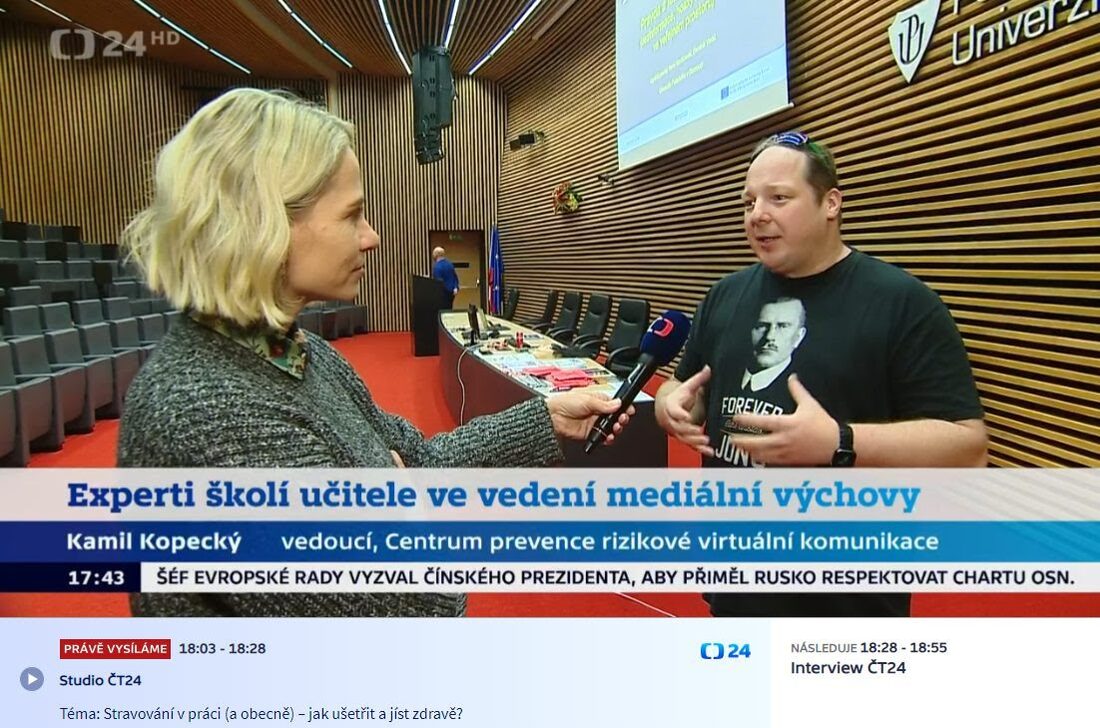
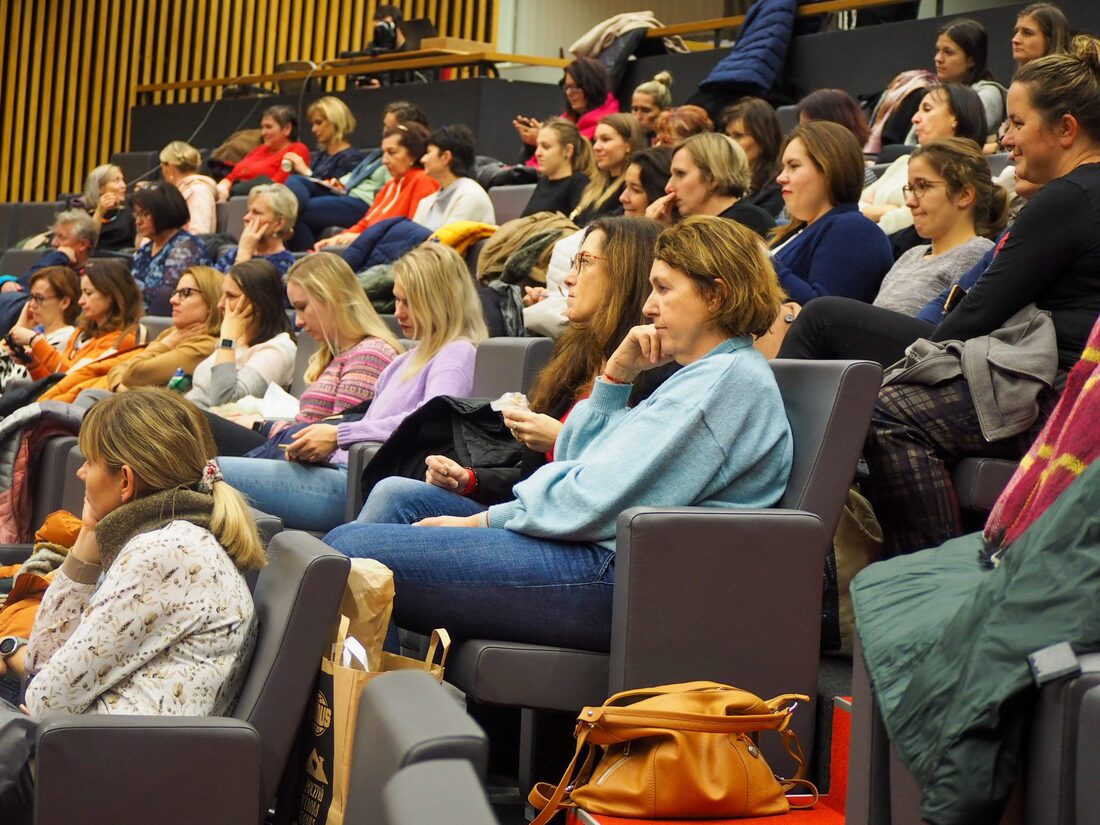
Our team brings together experts in education, psychology, digital technologies, cybersecurity, media literacy, and communication. We combine academic knowledge with practical experience to develop innovative solutions with real impact. Below you can meet the key members of our team who contribute to the Institute's research, education, and outreach activities.

The Institute for Research and Education in Digital Technologies and Cybersecurity actively welcomes collaboration with institutions, organizations, and individuals interested in advancing digital education, cybersecurity, media literacy, and innovation. We believe that shared expertise and international cooperation are key to addressing the complex challenges of today's digital world.
We are open to collaboration on both international and national projects and research initiatives. Our team regularly participates in grant-funded programs supported by the European Union, Czech ministries, academic institutions, and private companies. We also engage in contract research and publish in high-impact journals indexed in Web of Science and Scopus.
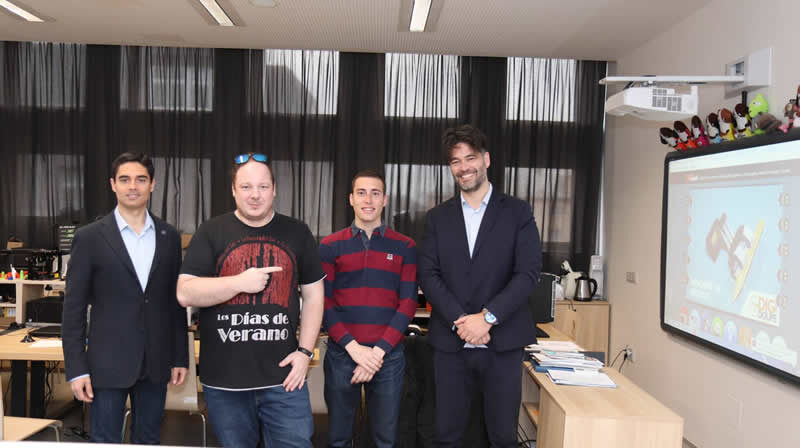
The Institute also supports research and academic internships, offering opportunities to PhD students, scholars, and educators from the Czech Republic and abroad. Interns can work with our team on scientific, educational, or development projects. We also provide training and organize workshops focused on digital safety, AI in education, and media literacy.
Another important area of cooperation is the development of smart tools powered by artificial intelligence. We specialize in creating innovative digital solutions for education and online safety. Communication is possible in English, Czech, Slovak, Spanish, and German, and we offer formal certificates to all collaborators and visitors.